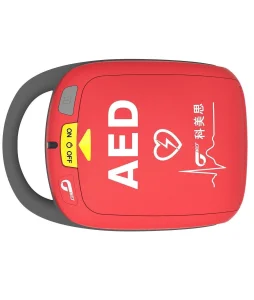
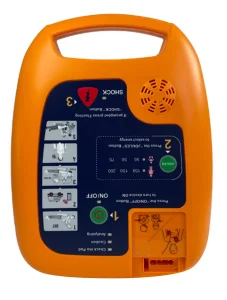
Product Description
✔
Key Advantages
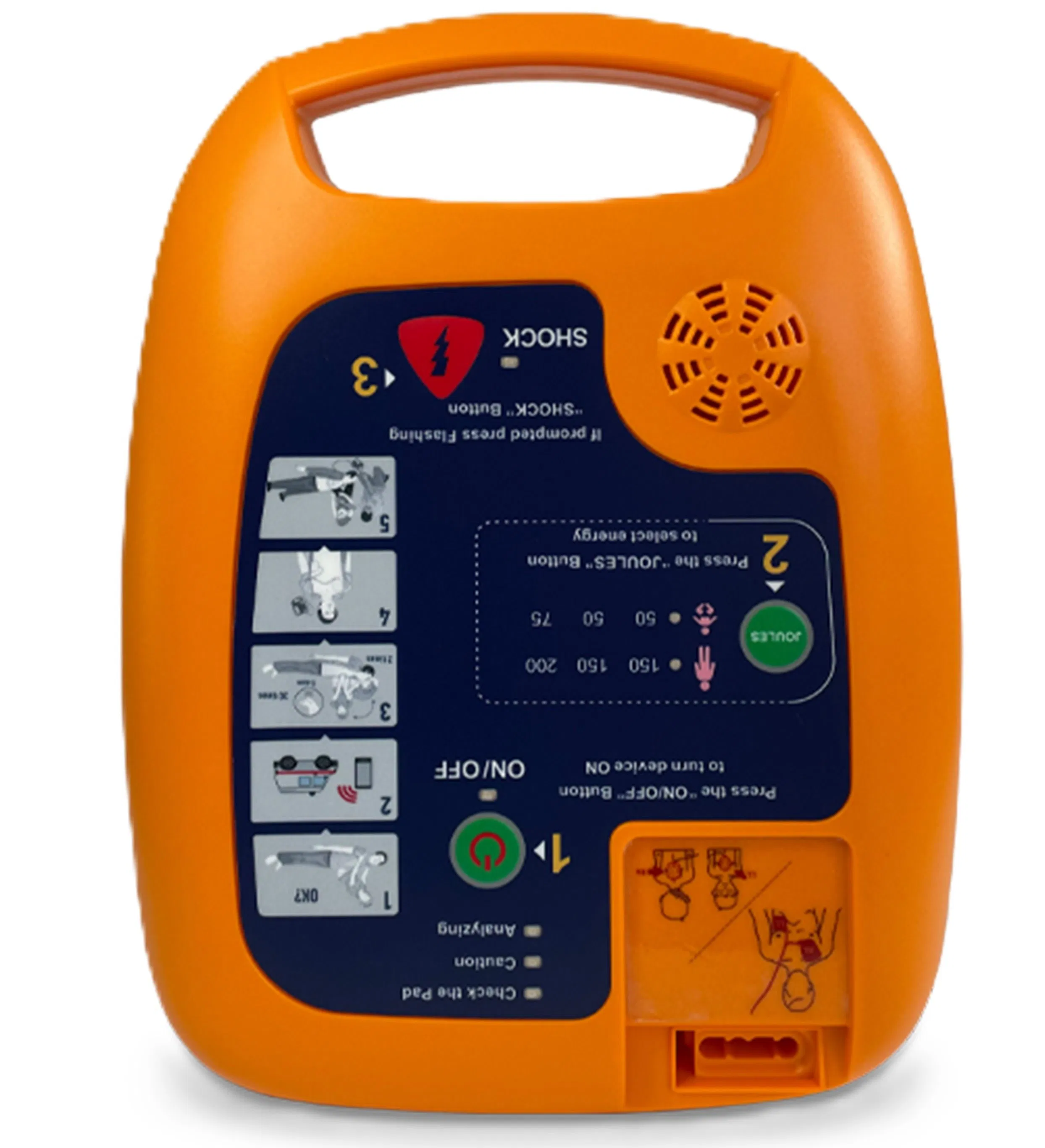
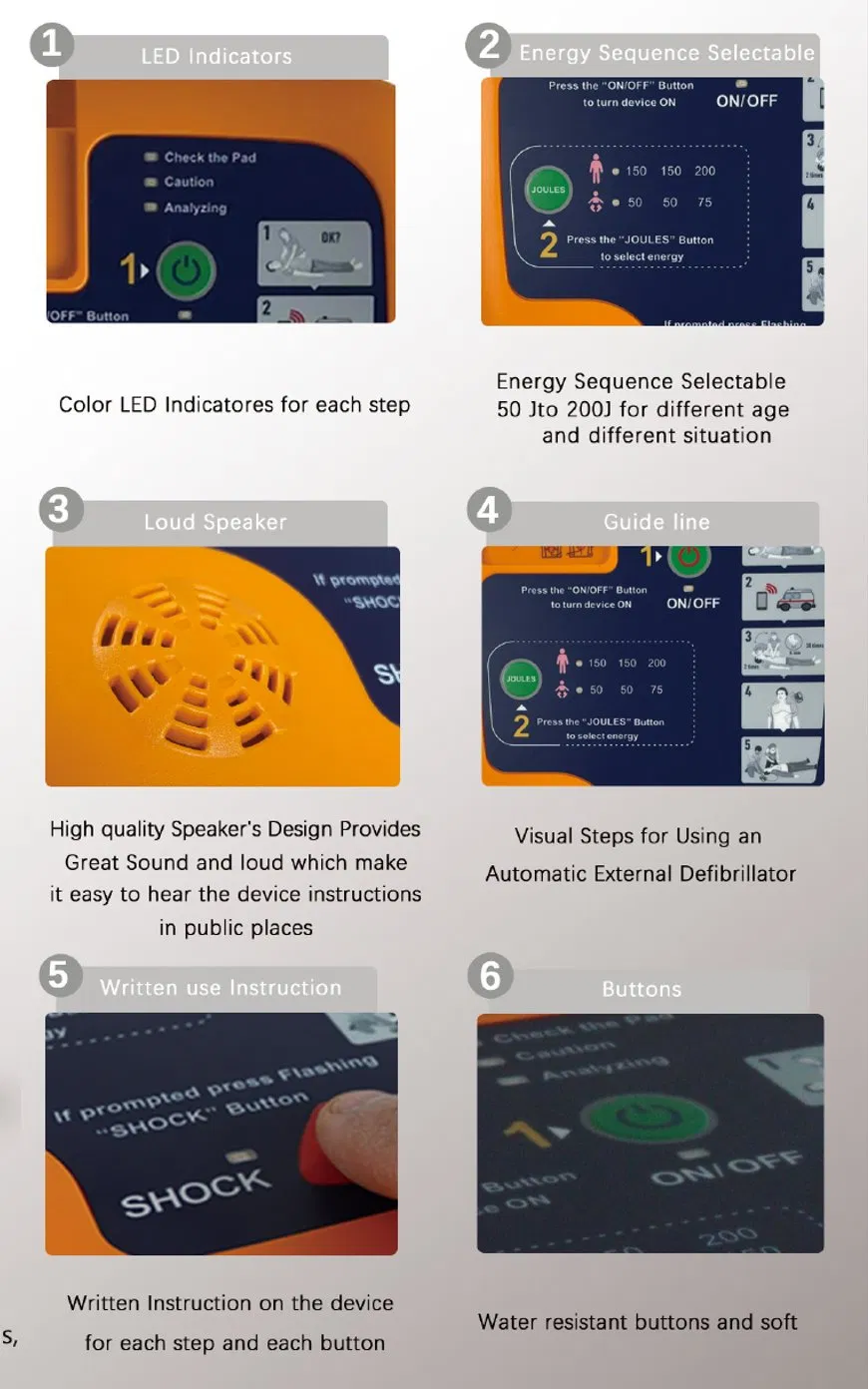
- • 2 Languages to choose
- • 5 Levels of sound volume
- • Adult/Child Mode Button
- • Infra-Red for data transmission
- • Daily, Weekly and Monthly Self-test
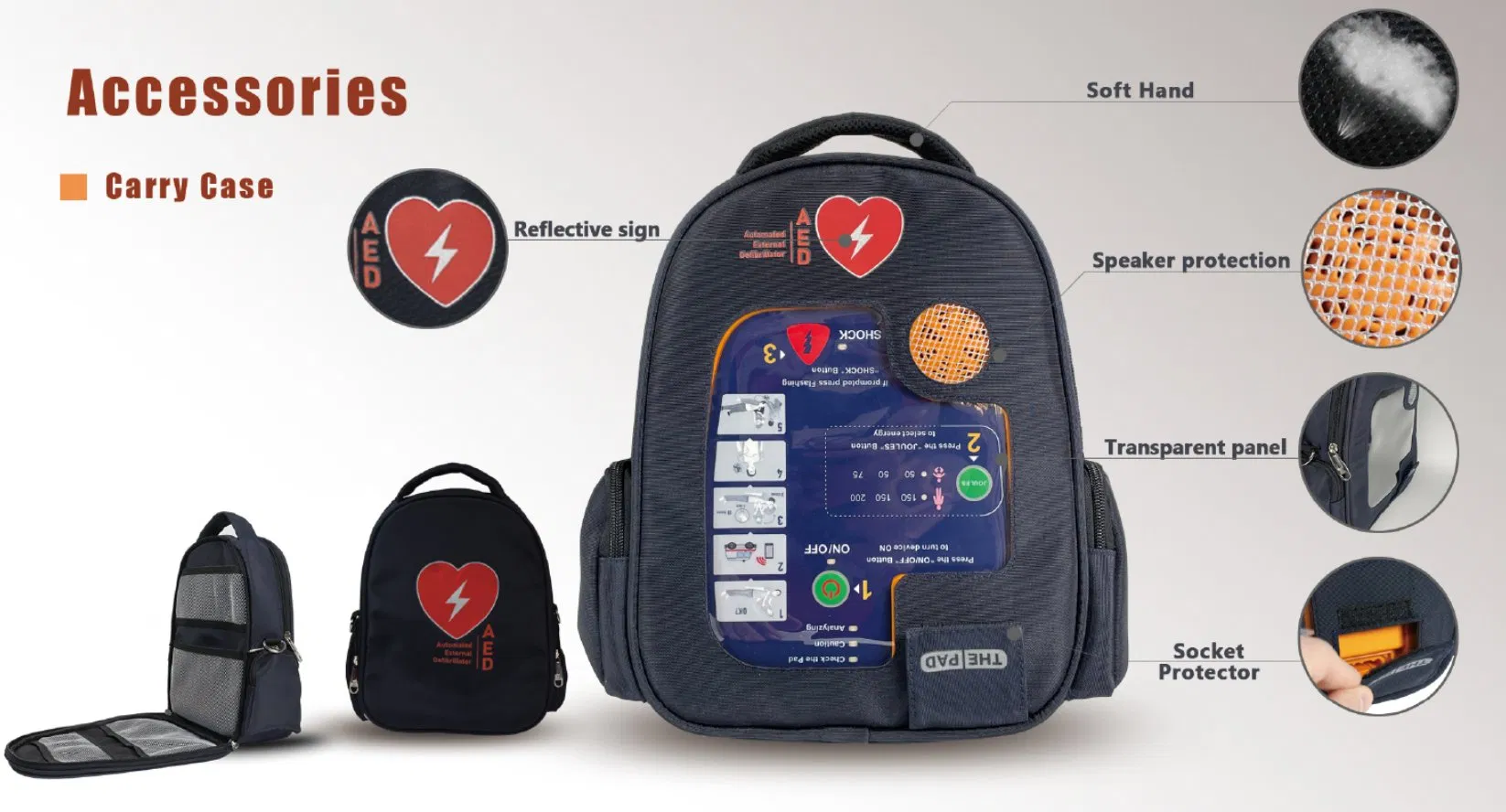
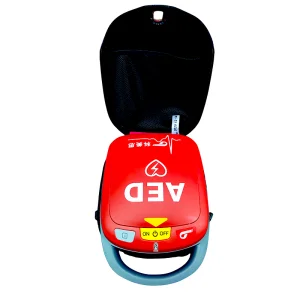
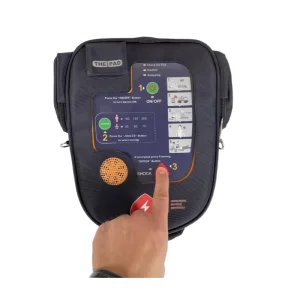
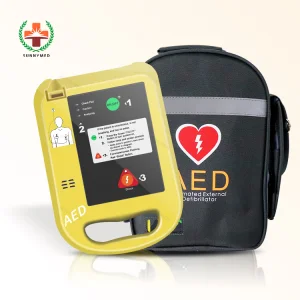
- • Operable while in the bag
How to Use
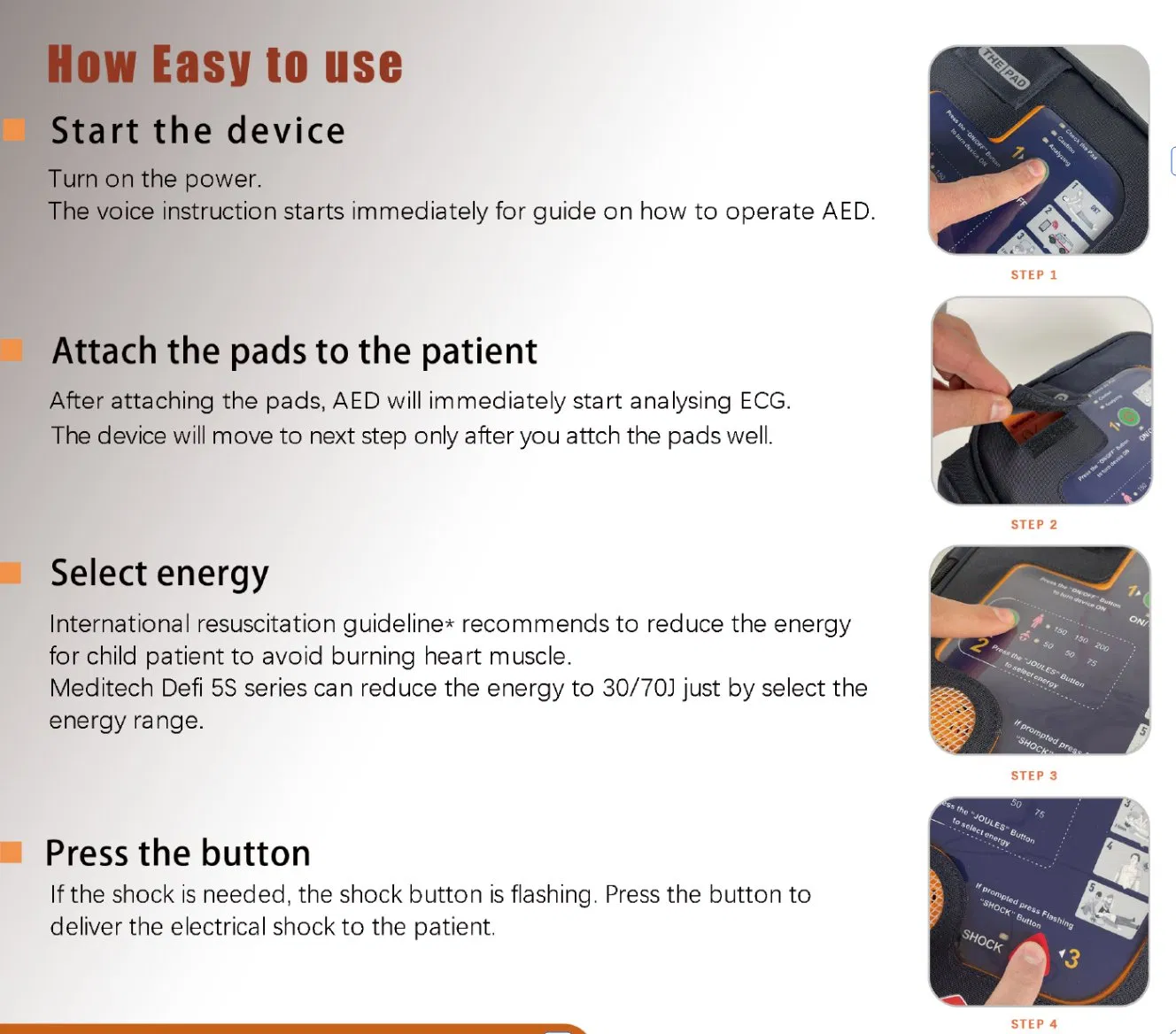
1
Start the Device
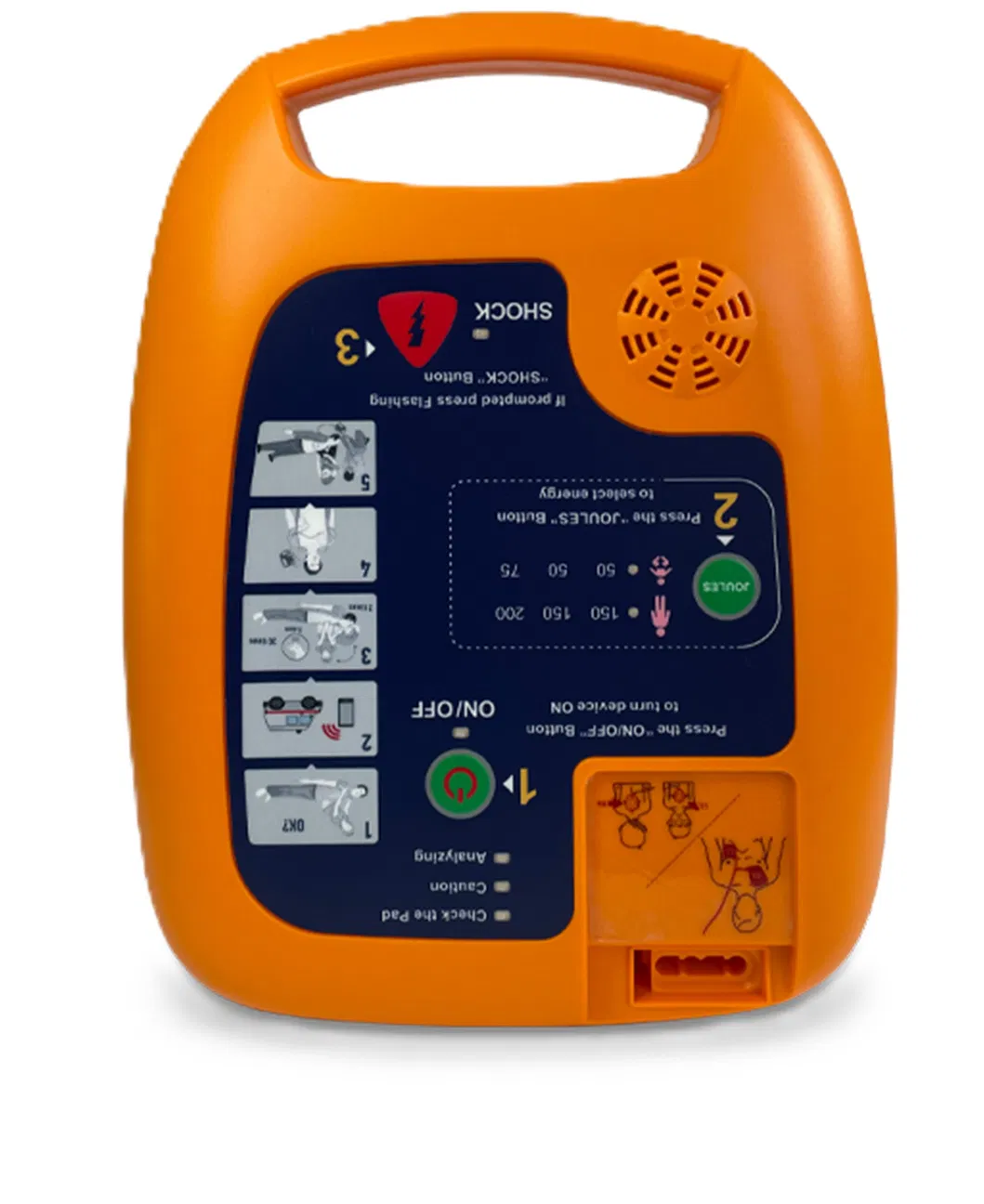
Turn on the power. Voice instructions start immediately to guide the operation.
2
Attach Pads
Attach pads to the patient. The AED will immediately start analyzing ECG. It proceeds only when pads are well attached.
3
Select Energy
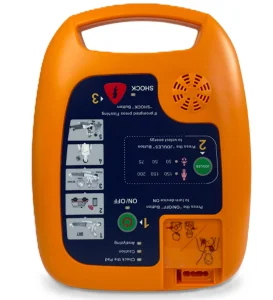
International guidelines recommend reducing energy for child patients. YH-Defi 5S can reduce energy to 30J/70J via the energy range selector.
4
Press the Button
If a shock is required, the button will flash. Press to deliver the electrical shock.
Technical Features
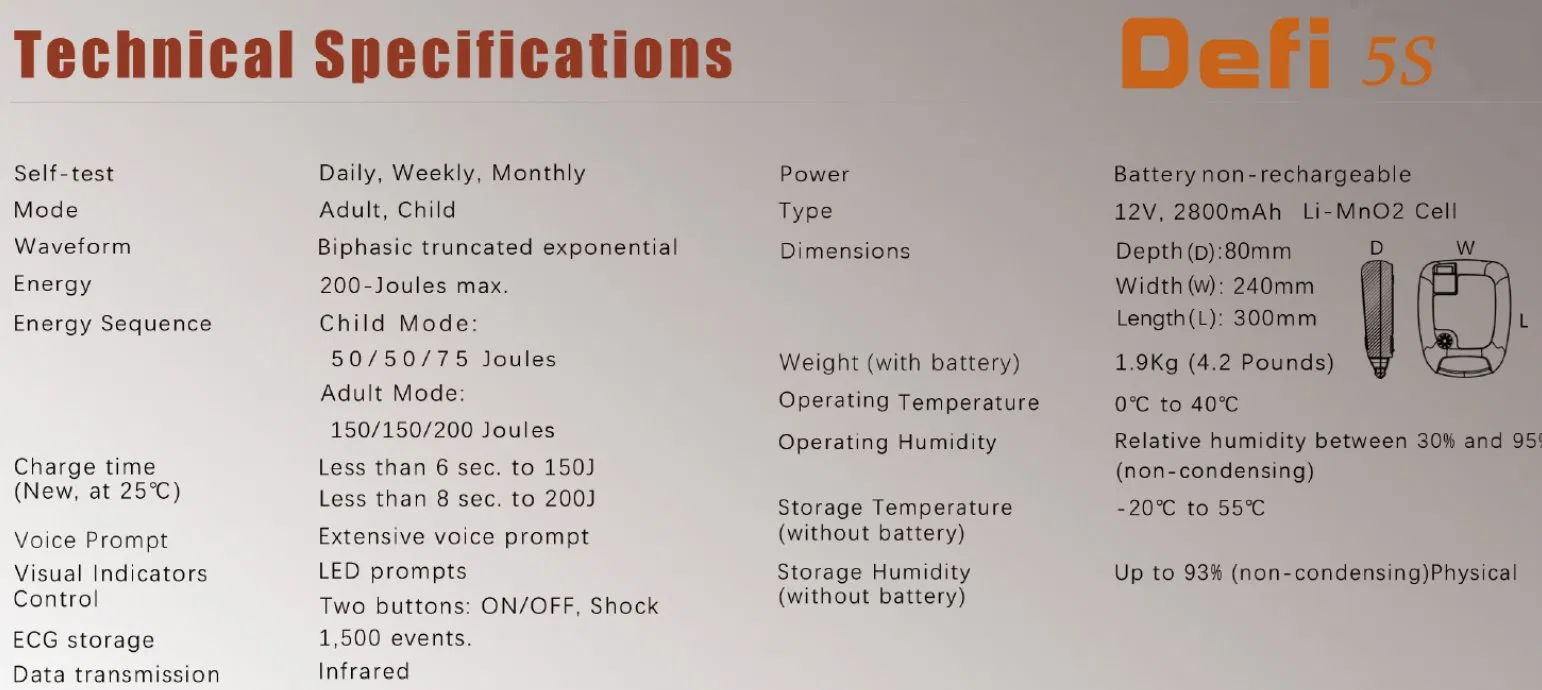
Data Communications: Supports infrared data transmission. Storage software allows reading/setting ECG waves, language settings, and analysis of storage data.
Disposable Pad: Designed for external defibrillation, non-invasive pacing, and monitoring for adults and children (over 20 kg / 55 lbs).
Frequently Asked Questions
Q1: Can the YH-Defi 5S be used on children?
A: Yes, it features a dedicated Adult/Child Mode button and allows for energy reduction to 30J/70J specifically for pediatric care.
Q2: How does the device ensure it is ready for an emergency?
A: The AED performs automatic Daily, Weekly, and Monthly self-tests to ensure all functions are operating correctly.
Q3: Is the device easy for non-professionals to use?
A: Yes, it provides immediate voice instructions upon power-up and will only proceed to the next step once pads are correctly attached.
Q4: How is data transferred from the AED?
A: Data is sent through an Infra-Red port to specialized storage software for ECG analysis and settings management.
Q5: Do I need to remove the AED from its bag to use it?
A: No, the YH-Defi 5S is designed to be usable even while it remains inside its carrying bag for faster response.
Q6: What are the requirements for the disposable pads?
A: The pads are suitable for external defibrillation, pacing, and monitoring for patients weighing more than 20 kg (55 lbs).
 Vdi Medical