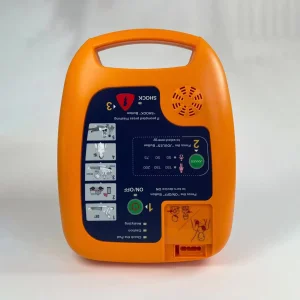
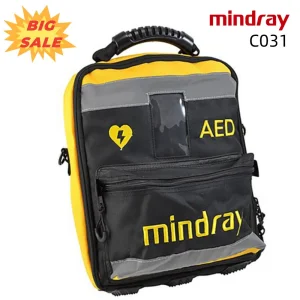
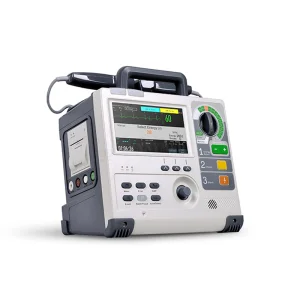
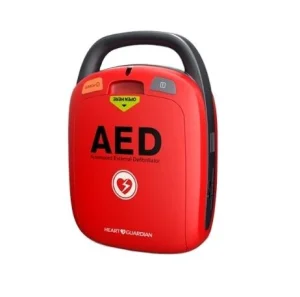
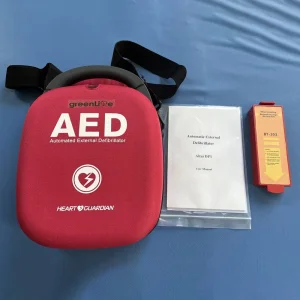
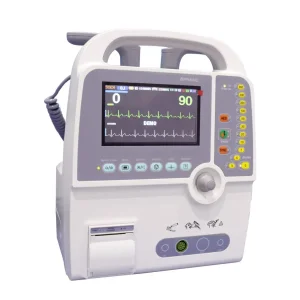
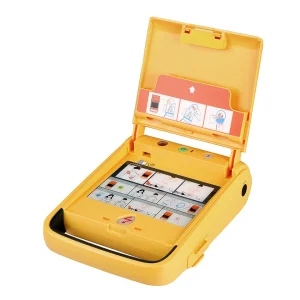
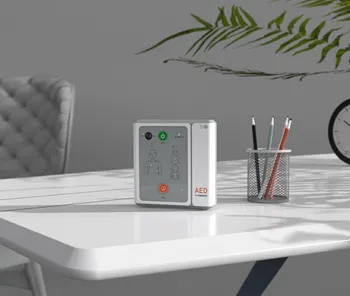
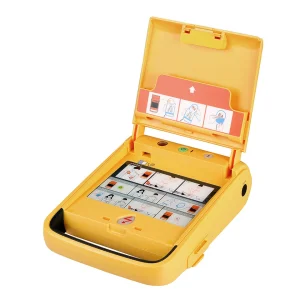
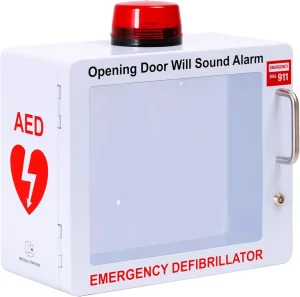
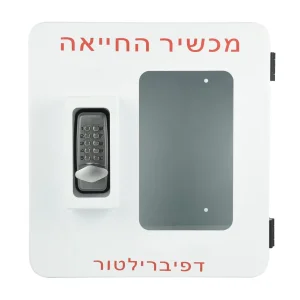
Founded in 2012, Vdi Medical is the first domestic medical device manufacturer to have its independently developed AED (Automated External Defibrillator) products certified by NMPA. It offers a full range of AEDs and pre-hospital emergency solutions.
Vdi Medical AED deployments have reached nearly 100,000 units, securing the second-highest domestic market share, and its products have entered over 30 countries and regions. Vdi Medical AEDs demonstrated a first-shock success rate exceeding 98% in animal trials and have successfully resuscitated over 150 patients to date.
Lives saved by Vdi Medical AEDs
First-shock success rate
AEDs installed globally
Annual production capacity
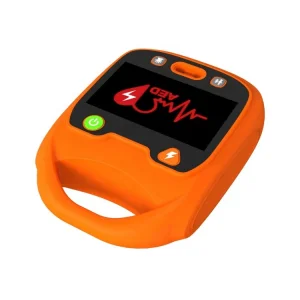
In the high-altitude environment of commercial aviation, sudden cardiac arrest (SCA) is a significant risk factor. Statistics suggest that cardiac events are among the leading causes of in-flight medical emergencies. When a passenger experiences SCA at 35,000 feet, the nearest hospital is hours away. This makes Aviation Approved AEDs the most critical piece of safety equipment in the cabin. Unlike standard AEDs, aviation-approved units must meet rigorous standards, including FAA TSO-C142a certification, ensuring they can withstand vibration, pressure changes, and electromagnetic interference without interfering with aircraft navigation systems.
As a leading China Wholesale Aviation AED Factory, we are integrating AI and IoT into our devices. Modern trends are shifting toward connected AEDs that provide real-time feedback to ground-based medical consultants via satellite Wi-Fi. This "tele-rescue" approach allows cabin crew to receive expert guidance during the resuscitation process, significantly improving survival rates in remote oceanic routes.
Our latest models feature dual-language voice prompts and simplified "one-button" operation, designed specifically for high-stress environments where cabin crew may be operating under extreme pressure.
International airlines (such as those governed by FAA, EASA, and CAAC) are increasingly mandating the presence of AEDs on all aircraft with more than 30 passenger seats. This has led to a surge in global procurement needs. Procurement officers are no longer just looking for a device; they are looking for a long-term partner who can provide:
China has emerged as a global hub for medical device innovation. As a premier AED Exporter, we offer several strategic advantages:
1. Vertical Integration: We control the entire supply chain, from PCB assembly to plastic injection molding. This allows us to maintain strict quality control while offering competitive wholesale pricing that Western competitors cannot match.
2. R&D Agility: Our engineering teams can rapidly customize software for localized languages and regional medical protocols, ensuring the device is "culturally intuitive" for rescuers in different countries.
3. Large-Scale Capacity: With an annual production capacity of 300,000 units, we can fulfill large-scale fleet retrofitting projects for major airlines within short lead times.
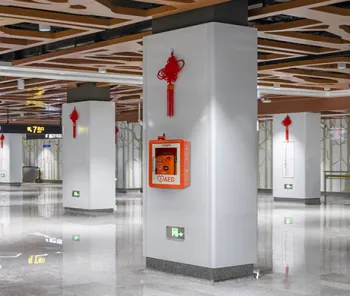
While aviation is the primary focus, the "Aviation Grade" certification implies a level of ruggedness that makes these AEDs ideal for other demanding environments:
Our AEDs utilize advanced Biphasic Truncated Exponential (BTE) waveforms. This technology adjusts the energy delivery based on the patient's impedance, ensuring the optimal shock is delivered. In aviation scenarios, where patients may vary widely in age and health status, this intelligent adjustment is vital for the 98% first-shock success rate we pride ourselves on.
 Vdi Medical