A portable defibrillator may carry only a small battery, yet it must deliver a controlled shock within seconds. The American Heart Association’s 2024 Heart Disease and Stroke Statistics Report places overall adult out-of-hospital cardiac arrest survival near 10.5% in the United States. Readiness matters. Battery chemistry, capacitor charging, thermal control, and standby monitoring can influence that narrow window.
This article examines seven practical energy storage designs for portable defibrillators. Options include lithium-ion packs, lithium primary cells, hybrid battery-capacitor systems, supercapacitors, modular packs, replaceable cartridges, and temperature-managed architectures. Each design creates trade-offs. Higher energy density can reduce weight, but it may complicate heat control and service safety. Supercapacitors can charge rapidly, although their voltage behavior and leakage require careful engineering. The FDA’s AED guidance also highlights battery status, self-testing, and replacement intervals as essential reliability considerations.
Dr. Michael R. Sayre, an emergency medicine and resuscitation specialist, offers a useful design principle: “An AED must be ready when it is needed.” That sentence is simple. It should shape every storage decision. To Optimize energy storage structure for portable defibrillation devices, engineers must connect electrical performance with field experience, human handling, and documented verification. IEC 60601-2-4 and ISO 14971 provide important safety foundations, but compliance alone does not guarantee usability. A cold ambulance, a crowded cabinet, or an aging battery can expose weaknesses that laboratory testing misses. The strongest design may not be the smallest or most powerful. It may be the one that remains predictable, visible, and serviceable after years of waiting.
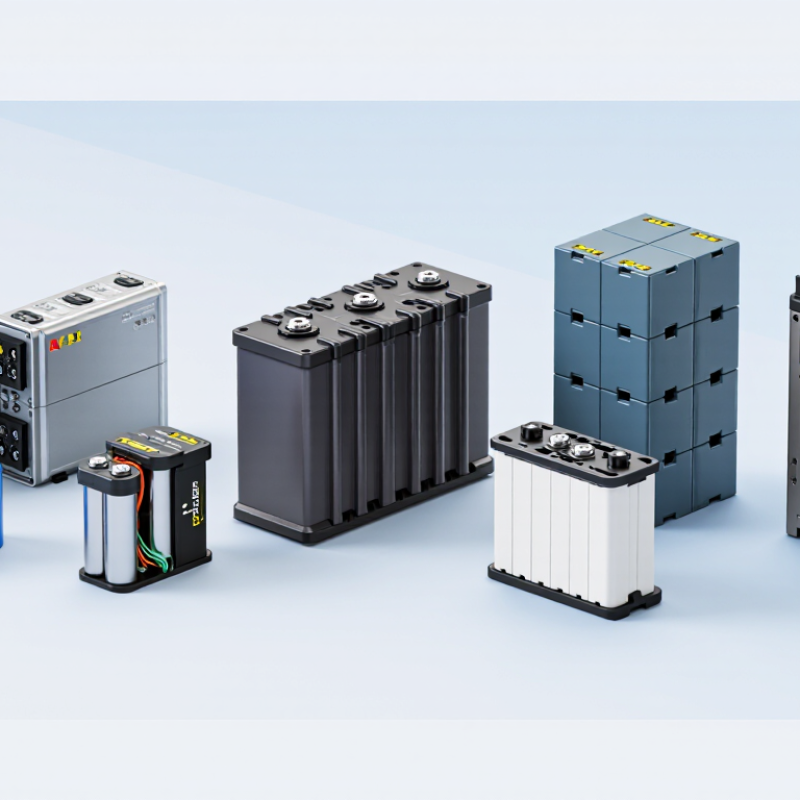
Defining Energy Storage Requirements for Portable Defibrillators
Defining Energy Storage Requirements for Portable Defibrillators
A portable defibrillator needs more than a large battery. It needs predictable energy delivery under pressure. The storage system must charge quickly, release a controlled pulse, and remain ready after long standby periods. In practice, engineers define delivered joules, charging time, voltage range, peak current, and patient impedance before selecting hardware.
Seven practical designs deserve evaluation: high-voltage electrolytic capacitors, film capacitors, supercapacitor banks, battery-capacitor hybrids, isolated transformer systems, modular capacitor arrays, and redundant storage paths. Each design creates trade-offs. Film capacitors can offer stability, while electrolytic parts may reduce size and cost. Supercapacitors support rapid cycling, but their voltage changes significantly during discharge. Hybrid systems often balance standby life with fast pulse delivery.
Temperature testing matters. A device stored in a hot vehicle may behave differently from one used in a cool clinic. Engineers should verify leakage, insulation, charging efficiency, and repeated discharge performance across expected conditions. Battery aging also changes available charging power. A neat calculation can still fail during a cold start.
Safety monitoring should detect abnormal voltage, capacitor faults, poor connections, and incomplete charging. Independent test data is more reliable than a single laboratory demonstration. Field evaluations should record recharge time, enclosure temperature, alarm behavior, and energy accuracy across multiple cycles. Requirements may need revision after testing. That is not weakness; it is responsible engineering.
Comparing Battery Technologies for Defibrillator Power Systems
Portable defibrillators need batteries that support repeated capacitor charging, not just long operating hours. Lithium-ion cells offer high energy density and strong discharge performance. A compact pack can reduce device weight during transport. However, aging, heat, and overcurrent events require a reliable battery-management system. Temperature sensors and cell balancing are essential, especially inside a sealed medical enclosure.
Lithium iron phosphate cells usually provide improved thermal stability and long cycle life. They are attractive for emergency equipment used frequently. Their lower energy density can increase pack size and weight. Nickel-metal hydride batteries tolerate demanding environments and are easier to manage in some designs. Yet, they usually lose charge faster during storage. Lead-acid systems remain dependable for high-current applications, but their weight limits true portability. Weight matters.
A practical design may combine a rechargeable battery with a dedicated high-voltage capacitor bank. The battery supplies charging energy, while the capacitor delivers the controlled shock pulse. This reduces stress on the cells and supports predictable recharge times. Engineers should test performance after cold storage, repeated shocks, partial charging, and battery aging. Real use is less tidy than laboratory testing. A pack may sit unused for months, then face several charging cycles within minutes. I would not select a battery by capacity alone. Service access, fault monitoring, enclosure cooling, and transport vibration deserve equal attention. Testing should follow applicable medical-device safety and performance standards, with documented evidence from representative operating conditions.
Designing Capacitor-Based Energy Storage and Rapid Discharge
Portable defibrillators need stored energy, not merely high voltage. The American Heart Association’s 2020 Guidelines recommend biphasic shocks of 120–200 joules for adult ventricular fibrillation, depending on device capability. A capacitor bank must deliver that energy quickly and repeatedly.
The core equation is simple: E = ½CV².
At 2,500 volts, storing 200 joules ideally requires about 64 microfarads. Real designs need additional capacity because switching losses, leakage, temperature, and aging reduce usable energy.
Rapid discharge depends on more than the capacitor itself. A controlled switching network must shape the biphasic waveform, limit current, and prevent unsafe residual charge. IEC 60601-2-4:2010+A1:2018 addresses essential safety and performance for cardiac defibrillators, including output accuracy, timing, and protection requirements.
Engineers should test the complete discharge path, not only the capacitor rating. A compact film capacitor may offer stable pulse performance, but its package can increase weight and insulation demands. Small details matter.
Field experience also exposes uncomfortable gaps.
A laboratory pulse can look excellent while cold-start charging becomes painfully slow. Battery voltage sag may alter charging time. I would not trust a design without repeated testing across temperature, battery state, and capacitor age. The FDA’s defibrillator guidance emphasizes verification of energy delivery, waveform performance, and electrical safety. Those checks should include thousands of charge-discharge cycles, leakage monitoring, and fault conditions.
Perfect calculations do not guarantee dependable rescue equipment.
Integrating Charging, Monitoring, and Safety Protection
7 Best Energy Storage Designs for Portable Defibrillators
A portable defibrillator needs energy storage that responds instantly, not merely stores capacity. The 2023 Heart Disease and Stroke Statistics update estimates over 356,000 out-of-hospital cardiac arrests occur annually in the United States. Roughly 90% are fatal. That reality makes charging reliability a clinical requirement. Lithium-based battery packs can provide high energy density, but they need carefully matched cells, thermal sensors, and controlled charging currents. A supercapacitor bank can deliver rapid discharge, while a battery supplies steady recharge power. Hybrid designs are promising, although their control circuits add failure points.
Monitoring must remain visible during stressful use. A battery-management system should track voltage, current, temperature, cell balance, and remaining charge. It should also record charging interruptions and unexpected energy loss. IEC 60601-2-4 emphasizes essential performance for cardiac defibrillators, including dependable energy delivery and protection against unsafe conditions. A simple screen showing “ready” is not enough. It should show usable reserve. That distinction is often missed.
Safety protection needs several layers. Include overcharge, over-discharge, short-circuit, reverse-polarity, and thermal shutdown controls. Mechanical isolation also matters; a loose connector can defeat excellent software. The 2020 American Heart Association guidelines stress rapid defibrillation within emergency response systems. Delays can cost lives. Designers should test cold starts, repeated shocks, aging cells, and partially charged packs. Real-world handling is messy. Our models may still be too optimistic. Reliability improves when every warning is tested by a tired operator, in poor lighting, with gloves on.
Selecting the Best Storage Design for Portable Use Cases
Selecting the Best Storage Design for Portable Use Cases
Portable defibrillators need more than a high-capacity battery. They need dependable energy during stress, movement, and uncertain weather. A field-ready design should deliver a strong pulse, recharge predictably, and remain safe after repeated handling.
Seven practical designs deserve evaluation: lithium-ion packs, lithium iron phosphate packs, lithium-polymer packs, supercapacitor banks, battery-supercapacitor hybrids, removable battery modules, and hot-swappable dual packs. Lithium-ion offers excellent energy density for compact carry cases. Lithium iron phosphate improves thermal stability and cycle life, but often adds weight. Supercapacitors release power quickly. They store less energy. Hybrid systems balance both demands, while removable and dual-pack designs can reduce downtime during transport.
Selection should begin with the mission, not the battery label. A device carried in an ambulance may need shock resistance, rapid charging, and operation after hours in a cold vehicle. A rural response unit may value long shelf life and simple status checks more than minimum weight. Include a battery management system, cell monitoring, protected connectors, and clear low-charge warnings. Verify performance through temperature, vibration, drop, and aging tests. Relevant medical-device and transport requirements also need review.
Small details matter. A latching pack is easier to replace with gloves. A readable indicator prevents guesswork. However, no design wins everywhere. Higher capacity can increase weight, and compact packs may lose performance in cold conditions. That trade-off deserves honest testing before deployment.
FAQS
It needs predictable energy, rapid charging, and controlled pulse release. Standby readiness also matters after months of storage. Weight matters.
They should define delivered joules, charging time, voltage range, peak current, and patient impedance. These figures guide practical hardware selection.
A 200-joule output at 2,500 volts ideally requires about 64 microfarads. Real systems need extra capacity for losses, leakage, aging, and temperature changes.
The battery can charge the bank, while the capacitor delivers the controlled pulse. This reduces battery stress and improves recharge consistency.
Engineers should examine discharge performance, aging, thermal behavior, charging speed, and cycle life. Capacity alone is not enough.
Some lithium-based cells provide high energy density and strong discharge performance. More thermally stable cells may be heavier. Other chemistries can lose charge faster during storage.
Testing should cover hot vehicles, cold storage, partial charging, repeated shocks, battery aging, and capacitor aging. Real use is less tidy than laboratory testing.
Monitoring should detect abnormal voltage, poor connections, capacitor faults, incomplete charging, and residual charge. Fault alarms must behave clearly.
The capacitor rating alone does not prove safe waveform delivery. Switching losses, timing, current limits, insulation, and battery voltage sag can change performance.
Field tests may expose slow cold-start charging, rising enclosure temperature, inaccurate energy delivery, or inconsistent alarms. A neat calculation can still fail.
Conclusion
Portable defibrillators require energy storage systems that deliver high power quickly, remain reliable during extended standby periods, and fit within strict size and weight limits. This article examines seven practical storage designs by first defining requirements such as pulse energy, recharge time, operating temperature, service life, and emergency availability. It then compares battery technologies according to energy density, discharge capability, safety, and maintenance needs, while also exploring capacitor-based systems that can support rapid energy release and repeated operation.
The discussion covers hybrid battery-capacitor architectures, compact high-power packs, modular storage units, and other portable configurations. It also explains how charging circuits, energy monitoring, thermal control, fault detection, insulation, and overvoltage protection contribute to dependable performance. By balancing output power, portability, durability, recharge efficiency, and safety, designers can Optimize energy storage structure for portable defibrillation devices and select a solution suited to field use, clinical mobility, or emergency response conditions.

 Vdi Medical