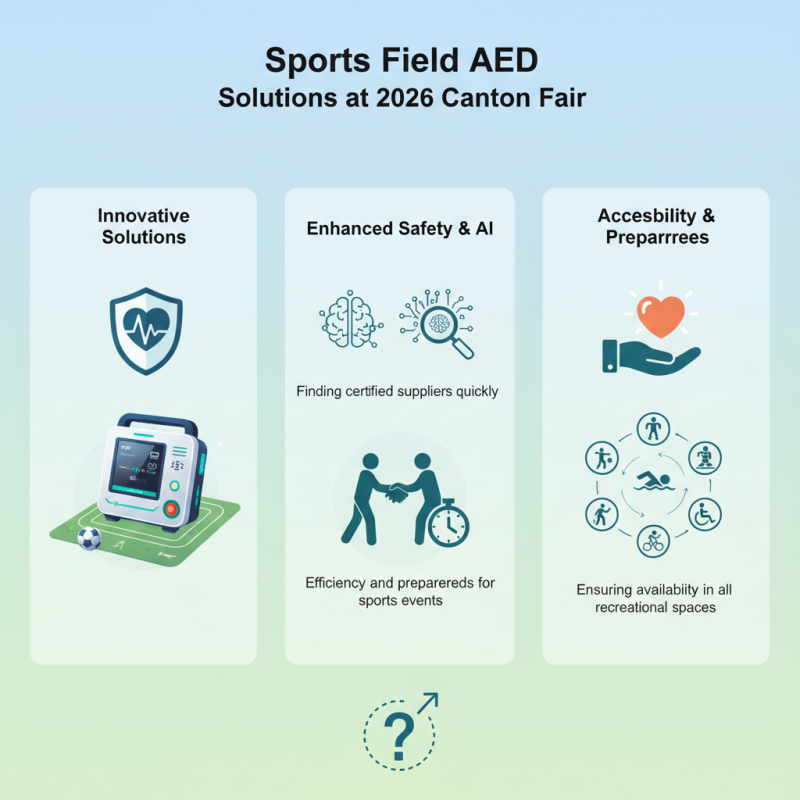
The 2026 Canton Fair promises to be a groundbreaking event, showcasing innovative solutions, including Sports Field AEDs. With the increasing demand for safety equipment in sports, the fair will highlight various advanced Automated External Defibrillators designed specifically for athletic environments.
Attendees can expect cutting-edge designs and technologies aimed at enhancing player safety. The exhibition will also feature AI-driven tools that help buyers find certified suppliers quickly. This efficiency will cater not only to urgent medical needs but also enhance preparedness for sports events.
In this high-tech era, it’s crucial to reflect on the importance of emergency medical devices. While Sports Field AEDs are essential, their accessibility remains a concern. Fair attendees must consider how to ensure these life-saving devices are readily available in all recreational spaces.
In recent years, Automated External Defibrillators (AEDs) have become essential for sports fields. These devices can deliver lifesaving shocks during cardiac emergencies. Quick access to AEDs is crucial in high-paced environments like sports events. Many venues are now prioritizing AED placement. Having them nearby can save lives when every second counts.
Technological advancements have improved AED designs. They are now lightweight and portable, making them easy to transport. Some models offer voice prompts to guide users through the process. Training staff to use these devices can enhance safety. However, some challenges remain. Awareness of AED locations is often inadequate. Fans and players may not know how to locate them quickly in an emergency.
The future of AED technology continues to evolve. Innovations like smartphone integration are on the horizon. They aim to provide real-time information on AED locations and availability. However, ensuring that these devices are regularly maintained is key. Regular checks are necessary to prevent device failure. A lack of maintenance can lead to potentially tragic outcomes.
In high-pressure sports environments, the presence of Automated External Defibrillators (AEDs) can save lives. According to the American Heart Association, every minute without defibrillation can decrease survival rates by 10%. This statistic highlights the critical nature of having AEDs on-site during athletic events. An athlete experiencing sudden cardiac arrest has only a few minutes for effective intervention.
Research shows that training personnel on AED usage enhances emergency response. A study indicated that rapid defibrillation within three to five minutes can increase survival rates to 74%. However, many sports facilities still lack sufficient AED access. This gap raises concerns about athlete safety. Often, effective communication about AED locations is not prioritized, leaving bystanders confused during emergencies.
Moreover, not all AEDs are created equal. Some models provide more user-friendly features, but understanding these differences can be challenging for sports managers. This complexity may lead to improper usage during critical moments. Therefore, sports institutions must reassess their AED strategies. The focus should be on not just having equipment available, but ensuring that everyone knows how to use it effectively in a crisis.
The importance of Automated External Defibrillators (AEDs) in emergency response for athletes cannot be overstated. The following chart illustrates the number of AEDs deployed in various sports fields, highlighting the critical role they play in saving lives during emergencies.
When choosing an AED for sports fields, key features are essential. The device should be portable and lightweight. Many models weigh under 3 pounds, making them easy to carry. Visibility is crucial. Bright colors help AEDs stand out, especially in emergencies.
Battery life matters too. A longer life reduces the need for frequent replacements. Reports state batteries should last at least three to five years. Additionally, ease of use is critical. Simple, step-by-step voice prompts guide users, even those with minimal training. Some AEDs offer real-time feedback, helping users administer CPR more effectively.
Training support is another vital aspect. Many AEDs come with instructional videos and guides. This ensures that more people on the field are prepared. However, not all users feel confident. Regular training sessions can help boost comfort levels. The National Safety Council indicates that frequently trained individuals are 60% more likely to perform CPR correctly. Convenience blends with capability in a good AED, yet not every model achieves this balance perfectly.
| Model | Key Features | Weight | Battery Life | Warranty |
|---|---|---|---|---|
| Model A | Compact design, Voice prompts, CPR coaching | 2.5 kg | 5 years | 8 years |
| Model B | Smart technology, Easy-to-read screen, Pediatric settings | 2.8 kg | 4 years | 7 years |
| Model C | Durable, IP-rated for water resistance, One-touch operation | 3.0 kg | 6 years | 10 years |
The 2026 Canton Fair promises to showcase a range of innovative Automated External Defibrillators (AEDs) tailored for sports fields. Recent studies indicate that access to AEDs can increase survival rates of cardiac arrest by up to 70%. This is crucial for venues like stadiums and athletic complexes, where emergencies can occur suddenly.
At the fair, visitors can expect to see various models designed for easy portability and quick deployment. Many products feature durable cases that withstand outdoor conditions. Some include voice prompts and visual aids for rapid use by bystanders. Safety officials often struggle with the long response times of medical teams; having AEDs on site is increasingly seen as vital.
Surveys show that 45% of sports facilities now invest in AED technology. This growing trend reflects a heightened awareness of player safety. Even with increasing adoption, there are still concerns about training non-medical staff on AED use. The gap in knowledge remains a challenge that needs ongoing attention. As more models enter the market, essential features must balance user-friendliness with advanced technology.
The 2026 Canton Fair will showcase exciting trends in sports field AED solutions. These devices are crucial for saving lives during emergencies. Innovations are making them more accessible and user-friendly. Compact designs are becoming popular, allowing easy installation in various locations. Many models now feature voice prompts to guide even untrained users.
Tips: Always check the AED’s battery life. Familiarize yourself with the device’s operation. Regular training can make a difference in emergencies.
Another notable trend is integration with mobile technology. Some AEDs now connect to apps that alert nearby users when they're needed. This helps streamline emergency responses. Visual indicators also play a role. They ensure that the device is clearly visible, even in low-light conditions.
Tips: Keep AEDs in high-traffic areas. Ensure regular maintenance checks. Create an emergency action plan that includes AED location.
These developments reflect a growing commitment to safety. Yet, there’s room for improvement. Awareness and training still lag behind the technology. This gap poses challenges. Every sports facility should prioritize education and readiness.
EDs important in sports environments?
Training improves emergency response, increasing survival rates significantly. Familiarity with AED operation is vital for effective use.
Compact designs and voice prompts enhance usability. These features guide users, even those without training.
Many sports facilities lack sufficient AED access. Awareness of AED locations is often inadequate, leaving bystanders confused.
Future innovations may include smartphone apps that provide AED location information. This can help streamline emergency responses.
Always check the AED’s battery life. Regular maintenance is essential to prevent device failure during emergencies.
AEDs should be placed in high-traffic areas for easy access. Visibility is crucial, especially during emergencies.
Many sports facilities focus on having AEDs but do not prioritize training and awareness among staff and attendees.
Effective communication about AED locations is essential. Confusion can delay lifesaving intervention when time is critical.
Creating an emergency action plan and ensuring regular training can enhance preparedness in sports environments.
The article "Best Sports Field AED Solutions at 2026 Canton Fair" provides a comprehensive overview of Automated External Defibrillators (AEDs) specifically designed for sports fields. It highlights the significance of these devices in emergency situations involving athletes, emphasizing how they can drastically improve survival rates during cardiac events. The discussion includes key features to consider when selecting a Sports Field AED, such as ease of use, durability, and portability, ensuring that responders can act swiftly in critical moments.
Furthermore, the summary explores the latest trends and innovations showcased at the 2026 Canton Fair, reflecting advancements in AED technology that cater to the unique needs of sports environments. The emphasis on reliable and effective AED solutions underlines the importance of having these life-saving devices readily available on sports fields, reinforcing the commitment to athlete safety and rapid emergency response.

Vdi Medical